

What if the financial safety net you spent years building for your family suddenly vanished because of a single letter? It’s a devastating reality for many, as industry data suggests that while 98% of claims are paid, the remaining 2% represent thousands of families left in financial limbo. You’re likely wondering what happens if my life insurance claim is denied and if the insurance company’s word is final. It isn’t. Most denials aren’t the end of the road; they’re simply the beginning of a strategic recovery process.
We know you feel overwhelmed by legal jargon and the fear of mounting costs, but you don’t have to face the carriers alone. If you’re ready to fight back, then we’ll help you audit that denial letter and navigate the appeals process to secure the $500,000 payout your family deserves. This guide provides a clear roadmap to challenge the insurer’s decision, understand the specific reason for your rejection, and take the exact steps needed to maximize your chances of a successful recovery. We’ll show you how to outsmart the system and win.
Key Takeaways
- Audit your denial letter immediately to identify the specific “Reason Code” the insurer is using to withhold your funds.
- Discover exactly what happens if my life insurance claim is denied during the contestability period and how to challenge allegations of material misrepresentation.
- Take control of the appeals process by gathering medical counter-evidence and drafting a strategic Notice of Appeal that forces a formal review.
- Learn when to leverage the State Department of Insurance as a free mediator or pursue legal action to secure the payout your family deserves.
- Bulletproof future coverage by auditing a carrier’s claim payout ratio and mastering the art of full disclosure during the application phase.
Decoding Your Life Insurance Denial Letter: The First 48 Hours
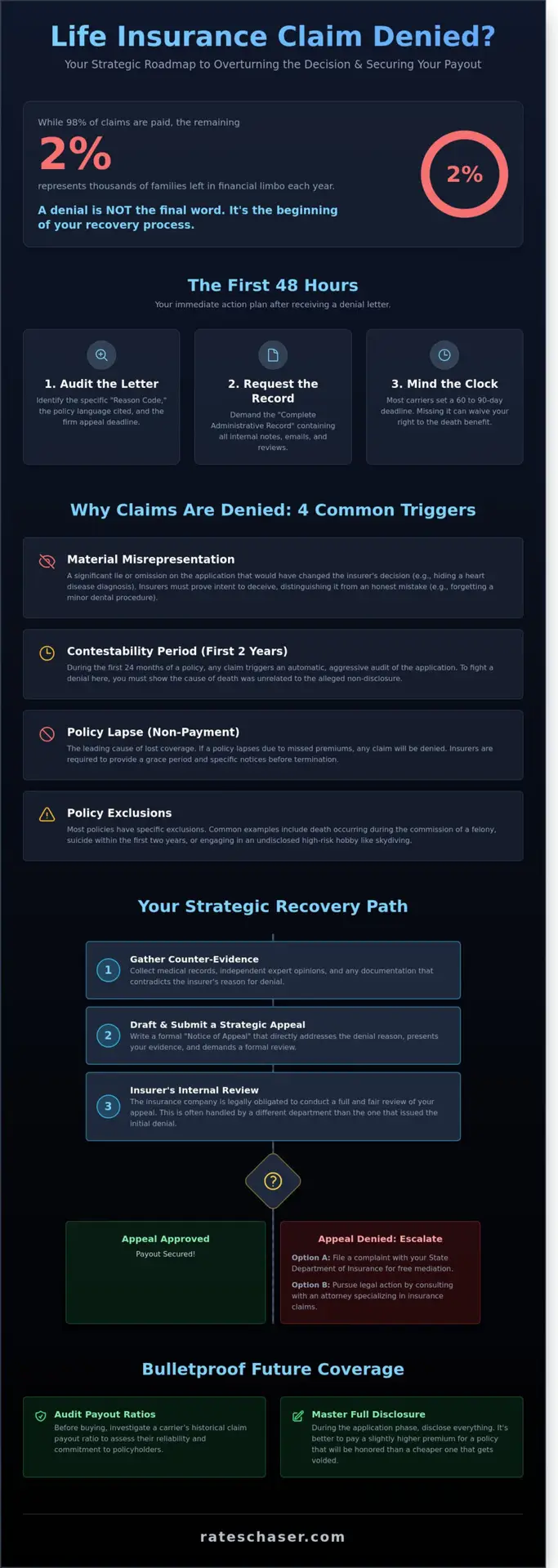
Receiving a denial letter is a shock, but you need to pivot to a strategic mindset immediately. This document is a formal notice that requires an aggressive audit, not a final verdict. Think of it as a corporate opening gambit. You have a narrow window to protect your financial future. Most carriers set a 60 to 90-day deadline for your response. If you wait too long, you risk waiving your legal rights to the death benefit. Stay calm and treat the letter as a position paper that you are about to challenge with evidence. If you’re asking what happens if my life insurance claim is denied, the first step is identifying the exact reason for the rejection.
Identifying the Specific Reason for Rejection
Locate the “Summary of Findings” in your correspondence. This section identifies the “Reason Code” or specific clause the insurer is citing to withhold your funds. You must distinguish between a technical denial and a substantive one. A technical denial might stem from a missing 2024 tax form, an unsigned affidavit, or a late filing. These are often procedural hurdles that you can clear with the right paperwork. To begin your audit, look for these three elements in the letter:
- The Reason Code: The specific internal identifier for the denial.
- The Policy Language: The exact paragraph from the original contract being used as a defense.
- The Appeal Deadline: The date by which you must submit your rebuttal.
A substantive denial is more serious. It usually involves claims of fraud, policy lapses, or material misrepresentation during the application process. Life insurance policies are legal contracts that allow insurers to void coverage if the applicant omitted a 2021 medical diagnosis or failed to disclose a high-risk hobby. Request the “Complete Administrative Record” right away. This file includes all internal emails, investigator logs, and medical reviews the company used to justify their decision. You can’t fight what you can’t see, and this record is your primary weapon for the appeal.
The 2026 Regulatory Landscape for Beneficiaries
Current 2026 consumer protection laws favor transparency more than ever before. Insurers are now held to a high “Good Faith” standard, which means they can’t hide behind dense jargon or vague excuses. Your denial must be accompanied by a “Notice of Rights” document. This paper explains your state-specific protections and the mandatory steps for an internal review. If this document is missing, the insurer might be in violation of updated transparency mandates.
Data from 2025 indicates that roughly 14% of denials are actually the result of simple data entry errors or clerical mistakes made by the insurer’s automated systems. When you understand what happens if my life insurance claim is denied, you realize that the burden of proof often shifts back to the company once you demand a full disclosure of their evidence. Modern regulations empower you to challenge the insurer’s narrative. Don’t accept their word as the final truth. Use these tools to secure the payout your family was promised.
Why Life Insurance Claims Get Denied: The 4 Most Common Triggers
Receiving a denial letter during a period of grief is a devastating experience. You’re already dealing with a loss; now you’re forced to confront a multi-billion dollar corporation. Understanding what happens if my life insurance claim is denied starts with identifying the specific legal triggers insurers use to withhold payouts. Most denials aren’t random; they’re based on four specific categories of policy language designed to protect the insurer’s bottom line.
Material Misrepresentation vs. Honest Mistakes
Insurers look for discrepancies between your application and your actual history. A “material” misrepresentation is a lie or omission that would have changed the insurer’s decision to issue the policy or the price they charged. If a policyholder forgot a minor dental procedure from 2022, that’s usually considered an honest mistake. However, if they failed to disclose a 2023 diagnosis of heart disease, that’s material. Carriers use MIB Group reports and pharmacy records to scan for these gaps. In 2026, most states require insurers to prove intent to deceive rather than simple clerical errors to uphold a denial. If you feel an insurer is unfairly twisting a minor error into a fraud claim, you should file a complaint with your state’s insurance department to trigger an external review.
The Contestability Period Deep Dive
Every life insurance policy includes a contestability period, which lasts for the first 24 months after the policy goes into effect. During these 730 days, the insurer has a legal right to investigate the truthfulness of every statement on the application. Any claim filed within this window triggers an automatic, aggressive audit. This clock often resets if a policy was recently reinstated after a lapse. To fight a denial here, you must demonstrate that the cause of death was unrelated to the alleged non-disclosure. For instance, if a policyholder didn’t mention a high cholesterol reading but died in a 2025 house fire, the insurer shouldn’t legally be able to void the entire death benefit. Documentation from independent medical examiners is often the key to winning these disputes.
Non-payment is the leading cause of lost coverage across the industry. Understanding what happens if my life insurance claim is denied due to a lapse involves looking at the exact timing of the final payment. Most states mandate a 31-day grace period. If the death occurs on day 30 after a missed payment, the company is legally required to pay the benefit, though they will subtract the overdue premium from the total. If the lapse happened because the policyholder was mentally incapacitated, you may have grounds for a retroactive reinstatement. You’ll need to provide hospital records or a doctor’s statement confirming the policyholder was unable to manage their finances.
Standard policies exclude specific risks that the carrier deems too high. Most contracts have a two-year suicide clause; if the death occurs after this 24-month period, the benefit is usually safe. Other common exclusions include death resulting from “illegal acts” or “hazardous hobbies” like unlicensed skydiving or professional racing. If the insurer claims an exclusion applies, demand to see the specific policy language and the police or toxicology reports they are using as evidence. Carriers often overreach by applying these exclusions to accidental deaths that don’t fit the strict legal definition of the clause.
The RatesChaser Guide to Filing a Formal Appeal
If your claim was rejected, you’re likely feeling frustrated and overwhelmed. Don’t let the insurance company’s initial decision be the final word. Understanding what happens if my life insurance claim is denied is the first step toward reversing that outcome. You have the right to challenge their findings, and 42% of successfully appealed claims are won simply because the beneficiary provided more precise documentation than the initial filing contained. Insurers often rely on automated systems to flag discrepancies, but a human-led appeal can clear up these misunderstandings.
Building Your Evidence Folder
Your appeal’s success depends on the quality of your counter-evidence. If the insurer cited a medical discrepancy, start with the death certificate. If the medical examiner listed a cause of death that contradicts the policy terms, you can request a ‘Corrected Death Certificate.’ Contact the coroner’s office within 14 days of the denial to present new facts. Often, a secondary contributing factor is listed as the primary cause by mistake.
Next, contact the deceased’s primary care physician. Doctors frequently use shorthand in medical notes that adjusters misinterpret as chronic conditions. Ask the physician for a formal letter of clarification to explain these entries. If the denial involves lifestyle choices, such as undisclosed tobacco use, gather ‘Affidavits’ from at least three non-family members. Coworkers or long-term friends can provide sworn statements confirming the deceased’s habits for the 24 months leading up to the policy application. This third-party testimony creates a factual barrier against vague 10-year-old medical records that insurers might use to justify a rejection.
Writing the Perfect Appeal Letter
Your ‘Notice of Appeal’ isn’t a place for emotional pleas; it’s a professional rebuttal. Keep your tone firm and factual. You’re building a case to show the insurer that their decision was a breach of the contract you both signed. Start by citing the specific policy page numbers and sections that support your claim. If you point to page 12, paragraph 4, the adjuster knows you’re looking at the same fine print they are.
Use specific phrasing to signal that you understand your rights. Statements like “This denial lacks substantial evidence” and “The company’s decision represents a failure to follow policy terms” are highly effective. You should also address common reasons for claim denials such as the contestability period or alleged misrepresentation. By naming these issues directly, you demonstrate that you’ve researched the legal landscape. If you’re wondering what happens if my life insurance claim is denied for a second time, remember that a well-structured first appeal often prevents the need for litigation later.
Submitting the Packet and Following Up
Once your evidence is ready, compile it into a single organized packet. Send this via USPS Certified Mail with a Return Receipt requested. This provides a legal timestamp and proof that the insurer received your documents. Digital uploads are convenient, but a physical paper trail is much harder for a large corporation to lose or ignore.
The timeline for an internal review varies by state, but most insurers will acknowledge receipt within 10 business days. Expect a final decision within 30 to 60 days. If you haven’t received an update by day 45, call the claims department and ask for the specific adjuster assigned to your file. Persistence shows the insurer that you’re a proactive advocate who won’t be intimidated by their bureaucracy. Stay organized, keep copies of every communication, and remain focused on the facts of the policy.
When to Escalate: State Insurance Departments and Legal Action
You’ve hit a wall with the internal appeal. Now it’s time to bring in the heavy hitters. You aren’t just a policy number; you are a consumer with legal protections. If you’re still asking what happens if my life insurance claim is denied, the answer involves shifting from defense to offense. You have two primary paths to explore: regulatory pressure and legal litigation. Both routes require precision and a clear understanding of the law.
Filing a Complaint with Your State Regulator
Every state operates a Department of Insurance (DOI) that oversees carrier conduct. You can access the National Association of Insurance Commissioners (NAIC) portal to locate your specific state’s filing system quickly. When you file a formal complaint, the DOI contacts the insurer directly. The carrier must provide a written explanation for the denial within a strict timeframe, usually 15 to 30 days depending on local statutes. According to the NAIC 2022 Insurance Department Resources Report, these departments handled over 3.6 million inquiries and recovered billions for policyholders nationwide. This process is free. It often forces a “second look” from a senior adjuster who wants to avoid regulatory scrutiny or potential fines.
Hiring a Life Insurance Lawyer
Sometimes a mediator isn’t enough. You need a hunter. If your claim involves a high payout, such as $250,000 or more, professional legal counsel is vital. Most specialized attorneys work on a contingency fee model. This means they take a percentage, typically 33% to 40% of the final settlement, and you pay nothing upfront. This structure aligns your interests with theirs; they only get paid if you win. You should vet your attorney carefully. Ask if they have specific experience with ERISA regulations. ERISA governs employer-sponsored plans and strictly limits your ability to sue for extra damages. Private policies offer more flexibility. If an insurer acted in bad faith, you might secure punitive damages beyond the original policy limit.
When interviewing a lawyer, use these specific questions to gauge their expertise:
- How many life insurance denial cases have you successfully settled in the last 12 months?
- Do you have experience litigating “Bad Faith” claims in this specific state?
- Will you handle the administrative ERISA appeal before we go to federal court?
- What is the exact statute of limitations for this claim in our jurisdiction?
Understanding what happens if my life insurance claim is denied means recognizing that the insurance company is not the final authority. They are a profit-driven entity. In many cases, the threat of a lawsuit is the only thing that moves the needle. In 2021, legal intervention helped recover millions in previously denied claims that were originally rejected for “lack of documentation” or “non-disclosure.” You have the right to challenge their math and their motives.
Don’t let a corporate “no” be the final word on your family’s financial future. You can take control of the situation right now. If you’re ready to fight back and win, you should secure expert guidance to recover your benefits and hold the insurer accountable for their promises.
Protecting Future Beneficiaries: Choosing Reliable Carriers
Securing a policy is only half the battle. The real victory is ensuring that the death benefit actually reaches your loved ones without a legal fight. You don’t want your family left wondering what happens if my life insurance claim is denied during their most vulnerable moments. Avoiding this nightmare starts with a rigorous audit of your potential carrier before you sign any contract. Reliability isn’t a feeling; it’s a data point you can track.
Smart consumers look at the “Claim Payout Ratio” to gauge a company’s reliability. This metric, often found in annual reports or through data from the National Association of Insurance Commissioners (NAIC), reveals the percentage of claims a company pays out versus those it disputes. Aim for carriers with a payout ratio of 98% or higher. A lower number suggests a culture of aggressive litigation or overly strict internal underwriting that could trap your beneficiaries in a years-long dispute.
Full disclosure is your strongest shield against a future denial. When you apply, every detail matters. If you omit a minor surgery from 2022 or forget to mention a weekend scuba diving hobby, you give the insurer a “material misrepresentation” loophole. Bulletproof your claim by being exhaustively honest. It’s better to pay a slightly higher premium now than to have a $500,000 claim rejected for a non-disclosure error in 2026. Integrity during the application phase eliminates the insurer’s primary weapon for denial.
Financial strength ratings provide an objective look at an insurer’s ability to pay. RatesChaser prioritizes carriers that maintain “A” or “A++” ratings from A.M. Best and S&P Global. These ratings aren’t just letters; they represent billions in liquid reserves and a long-term commitment to policyholders. We hunt for these top-tier performers because they have the capital to honor their promises even during volatile economic cycles. A company with a “B” rating might offer a cheaper rate, but the risk of insolvency or delayed payments isn’t worth the few dollars saved monthly.
Avoiding “Denial-Prone” Insurance Products
Not all policies are created equal. Guaranteed issue products might seem attractive because they skip the medical exam, but they often carry higher denial risks due to “graded benefit” periods or complex health exclusions. Fully underwritten policies are superior for long-term security. Because the insurer conducts a deep dive into your health upfront, they have fewer grounds to contest the claim later. To ensure your family is protected, compare the best life insurance companies known for high payout reliability and transparent terms.
The RatesChaser Advantage in Life Insurance
We don’t just list prices; we analyze the fine print to find carriers that offer consumer-first claim processes. Our platform uses real-time data to track which insurers are updating their incontestability clauses to favor the policyholder. As we move toward 2026, the industry is shifting. Our tools help you stay ahead of those changes. We provide the clarity you need to understand what happens if my life insurance claim is denied and how to prevent it from the very start. We act as your strategic partner in the financial jungle.
Don’t settle for a bad deal or a shaky carrier that might fail your family when they need support most. Use our comparison tools to unlock the most competitive rates from the world’s strongest insurers. Hunt for the best rates and strongest protection today to secure your legacy.
Take Command of Your Policy Recovery Today
A claim rejection doesn’t have to be the end of the road for your family’s financial security. By acting within the first 48 hours to decode your denial letter, you can identify if the insurer is citing a common trigger like a 2-year contestability period or a simple administrative error. Understanding what happens if my life insurance claim is denied is the first step toward launching a successful appeal or escalating your case to state regulators. You have the power to challenge these decisions and win.
Don’t wait for a crisis to find out your coverage is shaky. RatesChaser acts as your proactive advocate, using real-time 2026 market data to filter through the noise. We provide an unbiased comparison of A-rated carriers to ensure you’re backed by companies with a proven track record of transparency. It’s time to outsmart the system and secure a deal that actually holds its value when it matters most.
You’ve built a legacy worth protecting, and you deserve a partner who fights for every cent. Take the next step with confidence.
Frequently Asked Questions
How long does an insurance company have to deny a claim?
Most insurers must provide a decision within 30 to 60 days after receiving your claim. In states like California, the Fair Claims Settlement Practices Regulations require companies to accept or deny a claim within 40 days of receiving proof of loss. If the company needs more time, they must send a written notice explaining the delay every 30 days to keep you informed of the status.
Can a life insurance company deny a claim after 2 years?
Yes, but their legal grounds for denial shrink significantly after the 730-day contestability period ends. Once a policy has been active for two full years, the insurer can typically only deny a claim based on non-payment of premiums or documented cases of gross fraud. This protection ensures that minor medical errors made on the original application don’t stop your beneficiaries from receiving their payout years later.
What is the most common reason for life insurance claim denial?
Material misrepresentation is the leading cause of claim denials, accounting for roughly 60% of contested cases. This occurs when an applicant provides incorrect health data or fails to disclose a history of smoking or chronic illness. If you’re wondering what happens if my life insurance claim is denied, it’s often because the insurer found a discrepancy between the application and the medical records during their investigation.
Do I need a lawyer to appeal a life insurance denial?
You aren’t legally required to hire a lawyer, but professional help increases your success rate in complex disputes. If your policy is employer-provided, it’s governed by ERISA law, which gives you only 180 days to file a comprehensive administrative appeal. A specialized attorney ensures you submit every piece of evidence needed to win the case before the window closes, protecting your right to a future lawsuit.
What happens if a life insurance company goes bankrupt before a claim is paid?
State guaranty associations protect your payout if an insurance provider faces insolvency. Every state has a safety net system that covers death benefits, typically up to a limit of $300,000 per individual life. While the liquidation process might delay your payment by several months, you’ll still receive your funds through these state-mandated associations even if the original company’s assets are completely depleted.
Is a life insurance payout taxable if the claim was originally denied and then won on appeal?
The core death benefit remains tax-free, but any interest earned during the appeal process is taxable. According to IRS Publication 525, the principal amount paid to beneficiaries isn’t considered gross income. However, if a court orders the insurer to pay 5% interest because of a delayed or wrongful denial, you must report that specific interest portion as taxable income on your annual tax return.
Can an insurer deny a claim if the cause of death wasn’t disclosed but wasn’t the cause of death?
Insurers can deny claims for unrelated omissions if they’re considered material to the underwriting risk. If an applicant hid a heart condition but died in a car accident, the company may still deny the payout. They argue that had they known about the heart issue, they would’ve charged a 25% higher premium or declined coverage entirely, which makes the original contract void from the start.
How much does it cost to fight a life insurance denial?
Most life insurance attorneys work on a contingency fee basis, so you pay $0 upfront to start your case. If they successfully recover your funds, they typically take a 33% to 40% cut of the final settlement. Understanding what happens if my life insurance claim is denied involves knowing you can challenge a massive corporation without risking your own savings, as the lawyer only gets paid if you win.
